Tell us about the job
Takes about a minute. No obligation.
Sizing a boiler for a Franklin County home is not a calculation a contractor runs once and forgets. The local climate puts real seasonal demand on heating equipment, and the install has to be matched to that load from the start. 121 severe weather events were recorded in Franklin County, Illinois between 2015 and 2024. A contractor quoting a boiler here has to read that weather history into every decision about output, flue routing, and controls, because a system undersized for this area will cycle harder and wear faster than the manufacturer's ratings suggest.
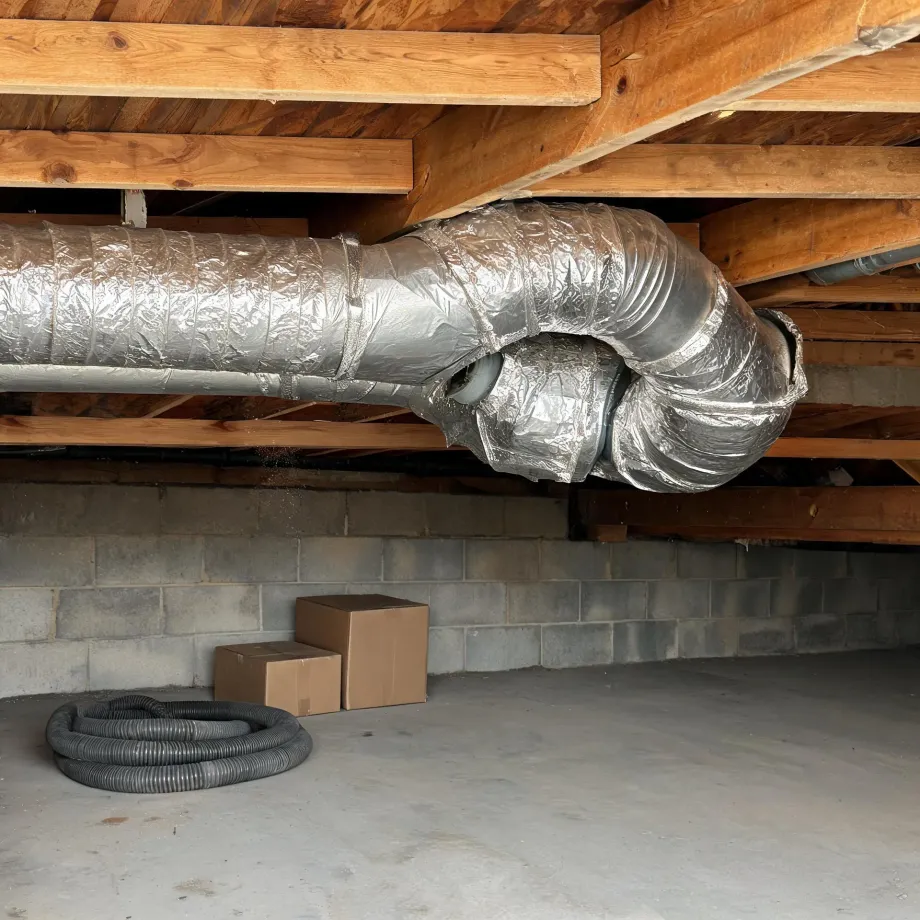
Ductwork laid for one generation of heating equipment carries assumptions about flow, sizing, and routing that were set before modern boilers existed. Half the homes in Franklin County, Illinois were built in 1963 or earlier (2020-2024 ACS 5-year). A contractor quoting a boiler installation in this county has to look at what the existing distribution system will actually do with the new unit, and whether it will need to be reworked before the boiler itself goes in. The electrical side gets the same read. The boiler on the truck is a known quantity; what is already inside the house is what the job turns on.
What Gets Installed With a New Boiler
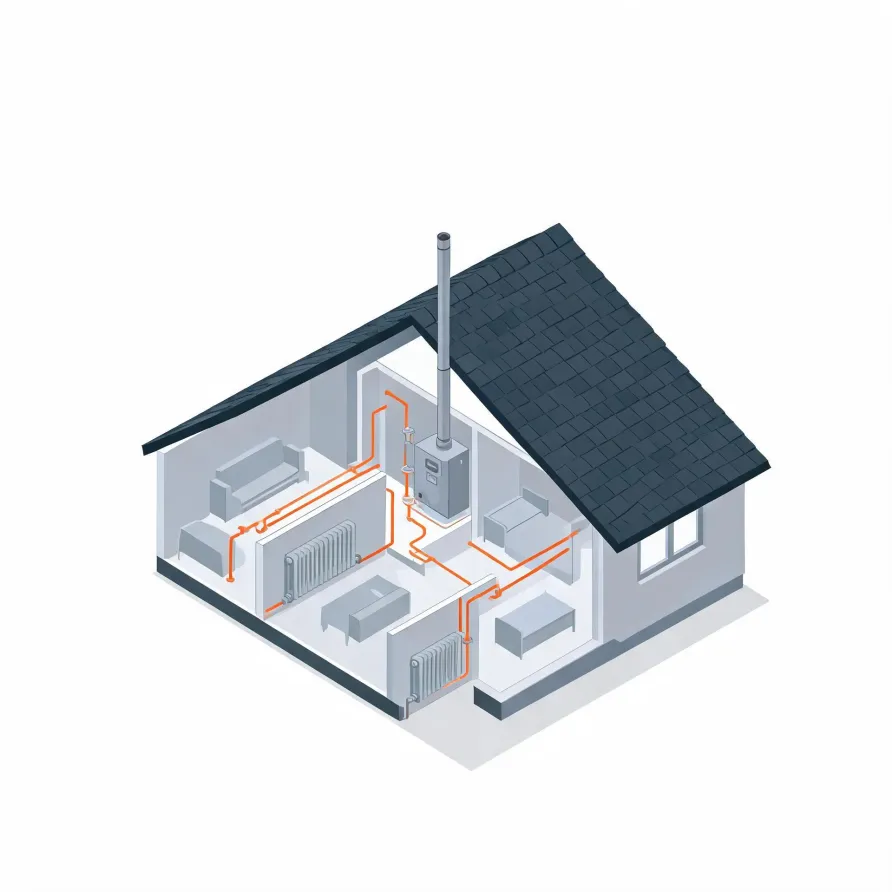
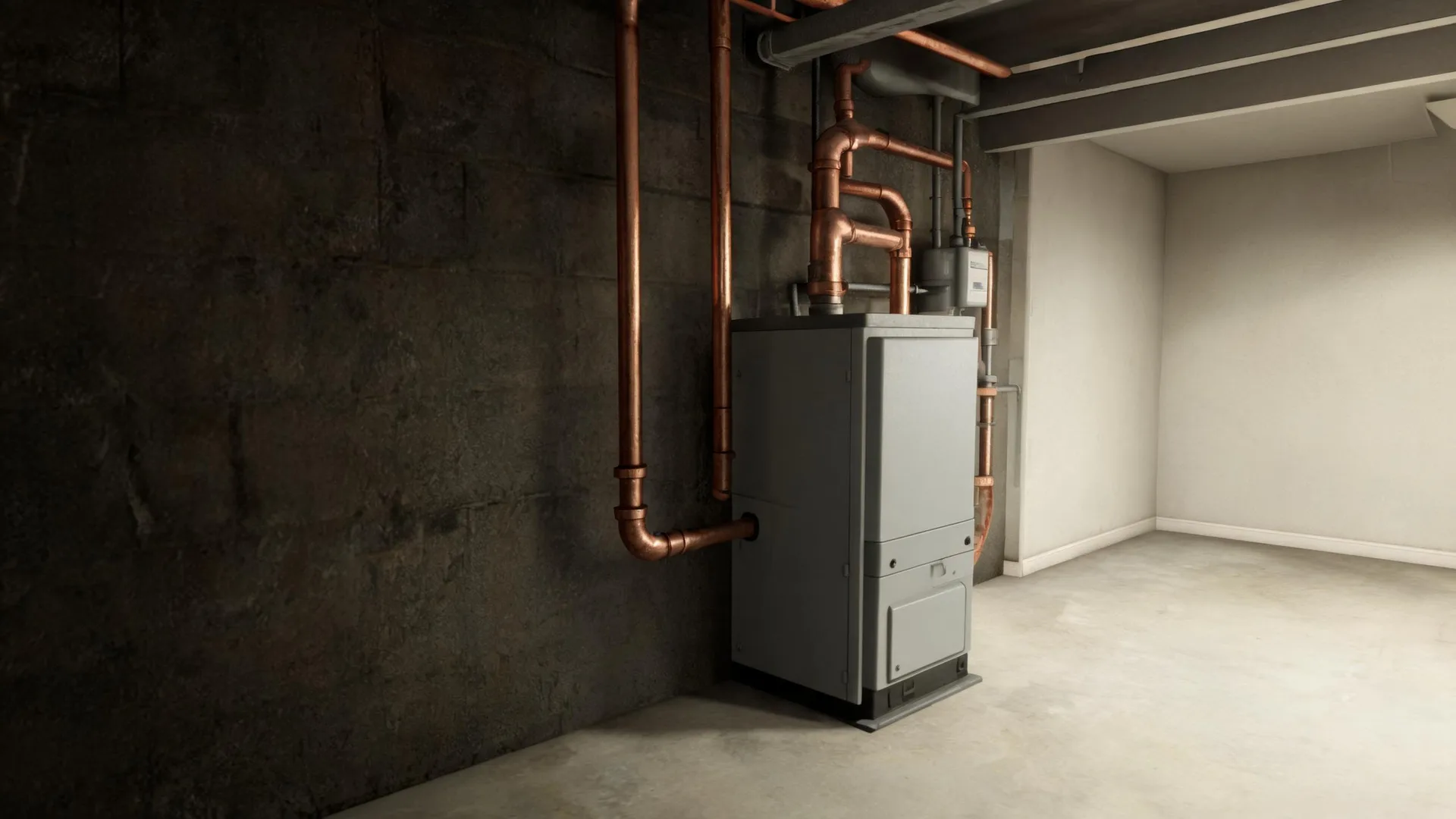
The boiler itself sits in a mechanical room, basement, or utility closet and is the heart of the system. A contractor mounts the unit to the floor or wall, connects it to a gas or oil supply line, and runs flue piping up through the building to vent combustion gases outside. The heat exchanger lives inside that cabinet, transferring heat from the burner to the water that circulates through the house.
From the boiler, supply and return piping runs through the building to the radiators, baseboard units, or radiant floor loops that deliver warmth to each room. A circulator pump, mounted on the piping near the boiler, keeps that water moving. An expansion tank, also close to the boiler, absorbs pressure changes in the closed loop, and a pressure relief valve provides a safety outlet if pressure climbs beyond the system's rated range.
The drawing here shows a typical layout, and a licensed contractor determines exactly which components and configurations apply to your home.
Get matched in Franklin CountyFranklin County, by the facts
121 severe weather events were recorded in Franklin County, Illinois between 2015 and 2024.
NOAA National Centers for Environmental Information, Storm Events Database, bulk CSV export, events 2015-01-01 through 2024-12-31.Half the homes in Franklin County, Illinois were built in 1963 or earlier (2020-2024 ACS 5-year).
U.S. Census Bureau, 2020-2024 American Community Survey 5-Year EstimatesFranklin County, Illinois holds 18,462 housing units (2020-2024 ACS 5-year).
U.S. Census Bureau, 2020-2024 American Community Survey 5-Year EstimatesOwners occupy 74.1% of the occupied homes in Franklin County, Illinois (2020-2024 ACS 5-year).
U.S. Census Bureau, 2020-2024 American Community Survey 5-Year EstimatesBoiler Installation Rules for Franklin County, Illinois1 sourced standards and codes
Licensing Rules for Franklin County, Illinois
Illinois leaves HVAC licensing to the municipality: state law lets the corporate authorities of each city or village examine, license and regulate heating, air conditioning and refrigeration contractors, and caps the licence fee they may charge at $50 — so who licenses you depends on the town you work in.
Severe Weather Events in Franklin County
Weather patterns in Franklin County put real demands on heating equipment, pushing boilers through temperature swings that affect how hard they work and how long they last. That workload is local, and the right installation accounts for it.
121 severe weather events, 2015–2024. Source: NOAA National Centers for Environmental Information, Storm Events Database.