Tell us about the job
Takes about a minute. No obligation.
A contractor quoting boiler repair in Washington County starts with the equipment itself: how old the heat exchanger is, whether the burner has been serviced, and what the controls look like. 51 severe weather events were recorded in Washington County, Illinois between 2015 and 2024. At that rate, severe weather touches a system now and then, but it does not grind components down the way a relentless seasonal load would. A cracked section or a failed circulator pump here has more to do with deferred maintenance or years of hard use than with anything the sky has thrown at the house.
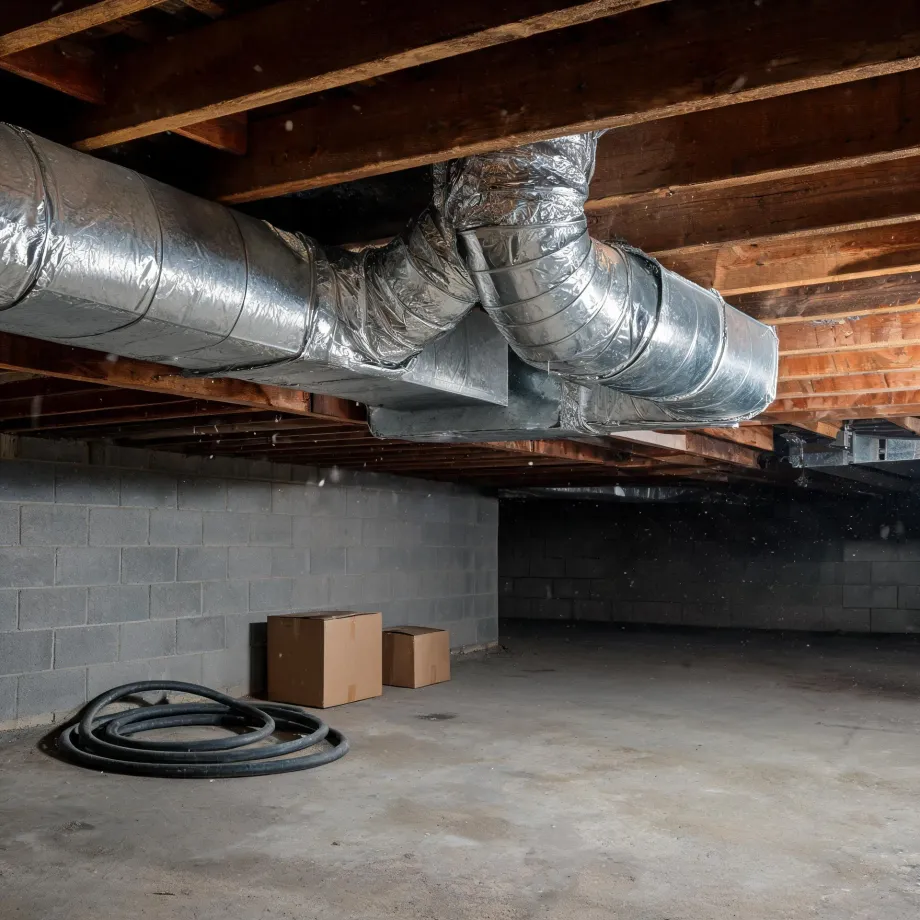
Boilers running in the older half of Washington County's housing stock were installed well after the houses themselves were built, which means the equipment and the building are on different timelines. Half the homes in Washington County, Illinois were built in 1972 or earlier (2020-2024 ACS 5-year). A contractor who opens a boiler here has to confirm whether the parts that system takes are still manufactured and distributed, because a unit old enough to fit that housing vintage sits in a range where sourcing becomes the actual constraint on the repair. The labor and the diagnosis are often the quick part. Finding a heat exchanger section or a pressure relief assembly for a discontinued model is where a job can stall.
The Parts of a Boiler a Contractor Checks First
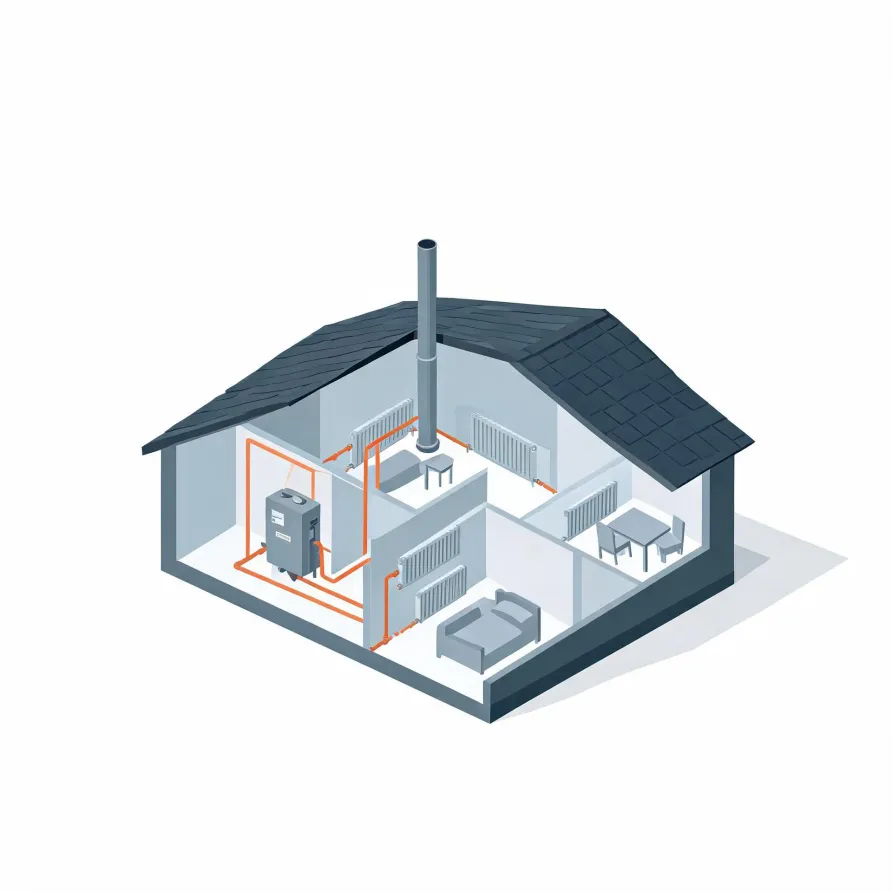
The boiler itself sits in the basement or a mechanical room and is the piece a contractor goes to first. Inside it, the heat exchanger and burner assembly are where most failures show up. A failed igniter, a cracked exchanger, or a faulty gas valve will each stop the unit in a different way, and each leaves its own signs.
From the boiler, pipes carry hot water to radiators or baseboard units spread through the living spaces, and a circulator pump keeps that water moving. The expansion tank and pressure relief valve sit close to the boiler and protect the system when pressure climbs. A contractor checks the pump, the tank, and the valve alongside the boiler itself because a fault in any of them can look like a boiler problem.
The drawing shows a typical boiler layout, and a licensed contractor determines which components apply to your specific system.
Get matched in Washington CountyWashington County, Illinois, by the numbers
51 severe weather events were recorded in Washington County, Illinois between 2015 and 2024.
NOAA National Centers for Environmental Information, Storm Events Database, bulk CSV export, events 2015-01-01 through 2024-12-31.Half the homes in Washington County, Illinois were built in 1972 or earlier (2020-2024 ACS 5-year).
U.S. Census Bureau, 2020-2024 American Community Survey 5-Year EstimatesWashington County, Illinois holds 6,415 housing units (2020-2024 ACS 5-year).
U.S. Census Bureau, 2020-2024 American Community Survey 5-Year EstimatesOwners occupy 84.1% of the occupied homes in Washington County, Illinois (2020-2024 ACS 5-year).
U.S. Census Bureau, 2020-2024 American Community Survey 5-Year EstimatesCodes & Standards Covering Boiler Work in Washington County, Illinois1 sourced rules and standards
Licensing Rules for HVAC Work in Washington County, Illinois
Illinois leaves HVAC licensing to the municipality: state law lets the corporate authorities of each city or village examine, license and regulate heating, air conditioning and refrigeration contractors, and caps the licence fee they may charge at $50 — so who licenses you depends on the town you work in.
Severe Weather Events in Washington County
Extreme weather puts direct stress on boiler systems, pushing them to work harder and surface faults that calmer conditions leave hidden. How much of that pressure a boiler takes on depends on what the local climate actually delivers, which is why the record below matters for repair work in this area.
51 severe weather events, 2015–2024. Source: NOAA National Centers for Environmental Information, Storm Events Database.