Tell us about the job
Takes about a minute. No obligation.
A contractor quoting a boiler installation in Pulaski County starts from what the building actually needs, not from a defensive posture against constant weather punishment. 69 severe weather events were recorded in Pulaski County, Illinois between 2015 and 2024. At that rate, severe weather is an occasional fact of life here rather than a grinding condition that reshapes every sizing decision. What drives the right specification is the building's insulation, its heat loss, and the age and layout of the distribution system. A new boiler sized and installed correctly for those factors will serve the house well. Weather gets factored in, but it does not run the calculation.
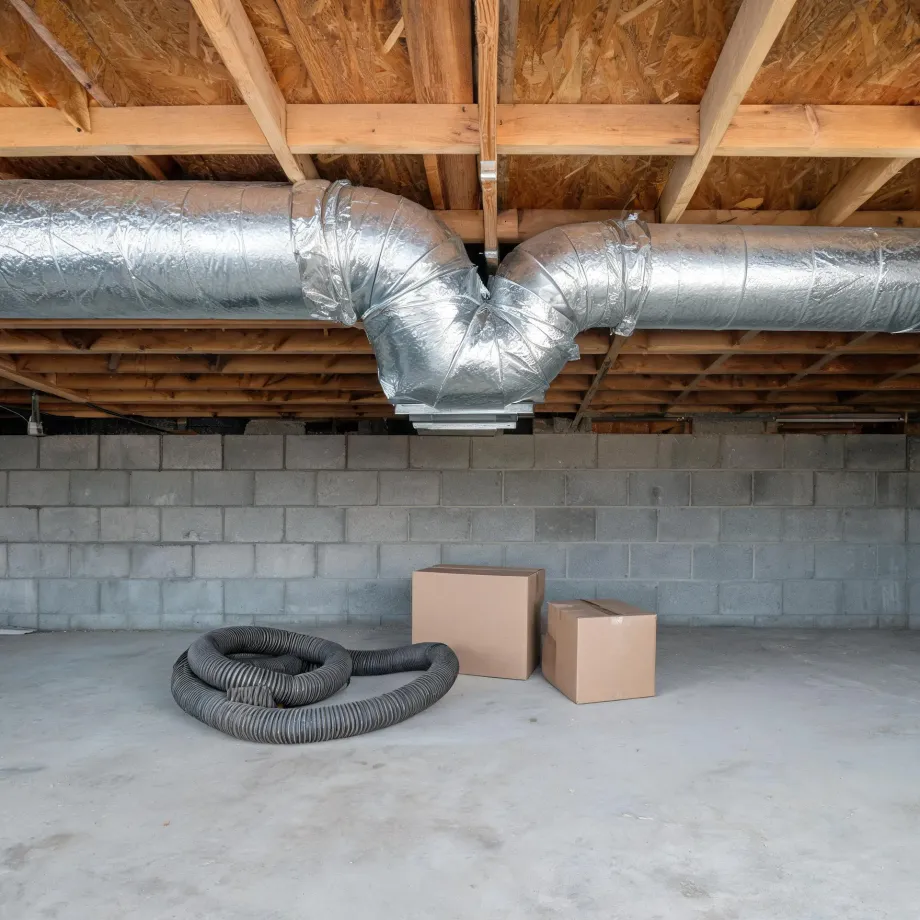
Older ductwork carries assumptions from whoever designed it, and in housing this old those assumptions belong to a different era of equipment. Half the homes in Pulaski County, Illinois were built in 1969 or earlier (2020-2024 ACS 5-year). A contractor installing a boiler here has to assess whether the existing distribution system will move heat the way the new unit is designed to deliver it, and in many houses that assessment changes the scope before any equipment is priced. The electrical side follows the same logic: what the house was wired to handle and what the new system draws are two figures that have to match before the installation can proceed.
What Gets Installed With a New Boiler
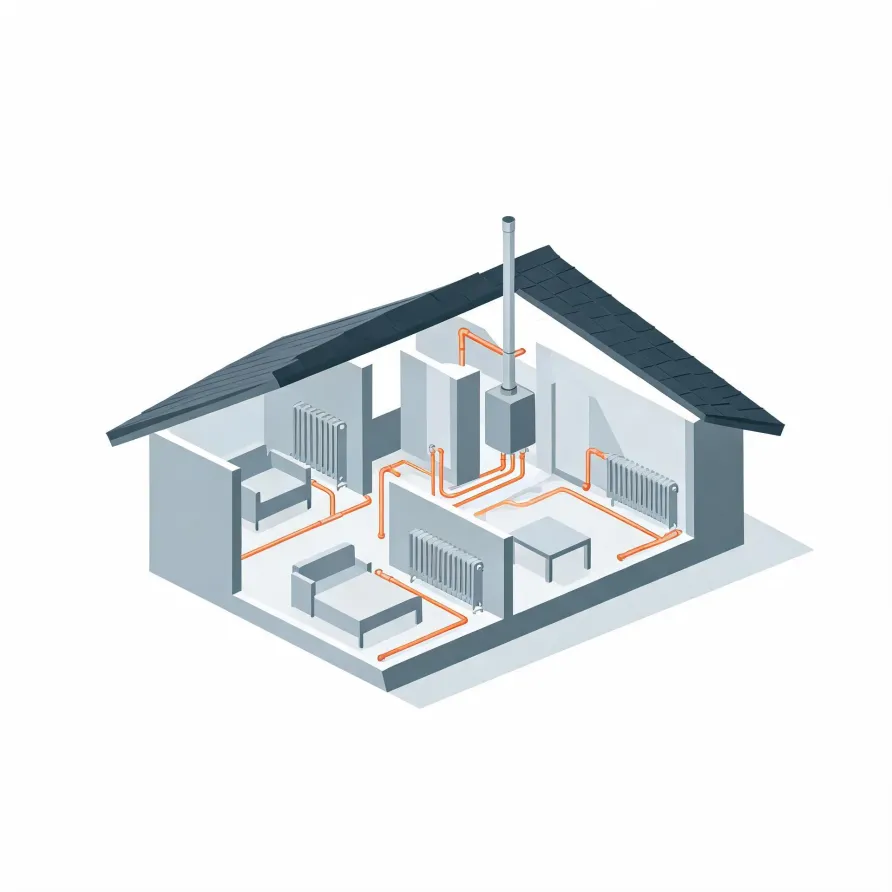
The boiler itself sits in the basement or a mechanical room and is the heart of the system, burning fuel or using electricity to heat water that then moves through the house. Alongside it, the expansion tank absorbs pressure changes in the water as it heats and cools, and the circulator pump drives the water through the pipes.
From the boiler, supply pipes run through walls and floors to the heat emitters, which are either radiators standing against walls in each room or radiant tubing laid beneath the floor. A thermostat mounted on a main-floor wall signals the whole system when to fire and when to rest.
The drawing shows a typical layout, and a licensed contractor determines exactly what applies to this house.
Get matched in Pulaski CountyPulaski County, by the numbers
69 severe weather events were recorded in Pulaski County, Illinois between 2015 and 2024.
NOAA National Centers for Environmental Information, Storm Events Database, bulk CSV export, events 2015-01-01 through 2024-12-31.Half the homes in Pulaski County, Illinois were built in 1969 or earlier (2020-2024 ACS 5-year).
U.S. Census Bureau, 2020-2024 American Community Survey 5-Year EstimatesPulaski County, Illinois holds 2,851 housing units (2020-2024 ACS 5-year).
U.S. Census Bureau, 2020-2024 American Community Survey 5-Year EstimatesOwners occupy 68.2% of the occupied homes in Pulaski County, Illinois (2020-2024 ACS 5-year).
U.S. Census Bureau, 2020-2024 American Community Survey 5-Year EstimatesBoiler Installation Rules & Standards for Pulaski County, Illinois1 sourced rules and standards
Licensing Rules for HVAC Work in Pulaski County, Illinois
Illinois leaves HVAC licensing to the municipality: state law lets the corporate authorities of each city or village examine, license and regulate heating, air conditioning and refrigeration contractors, and caps the licence fee they may charge at $50 — so who licenses you depends on the town you work in.
Severe Weather Events in Pulaski County
Weather puts real demands on heating equipment, and those demands vary by where you live. Boiler work in Pulaski County is sized and specified against local conditions, which is why the weather record here matters.
69 severe weather events, 2015–2024. Source: NOAA National Centers for Environmental Information, Storm Events Database.